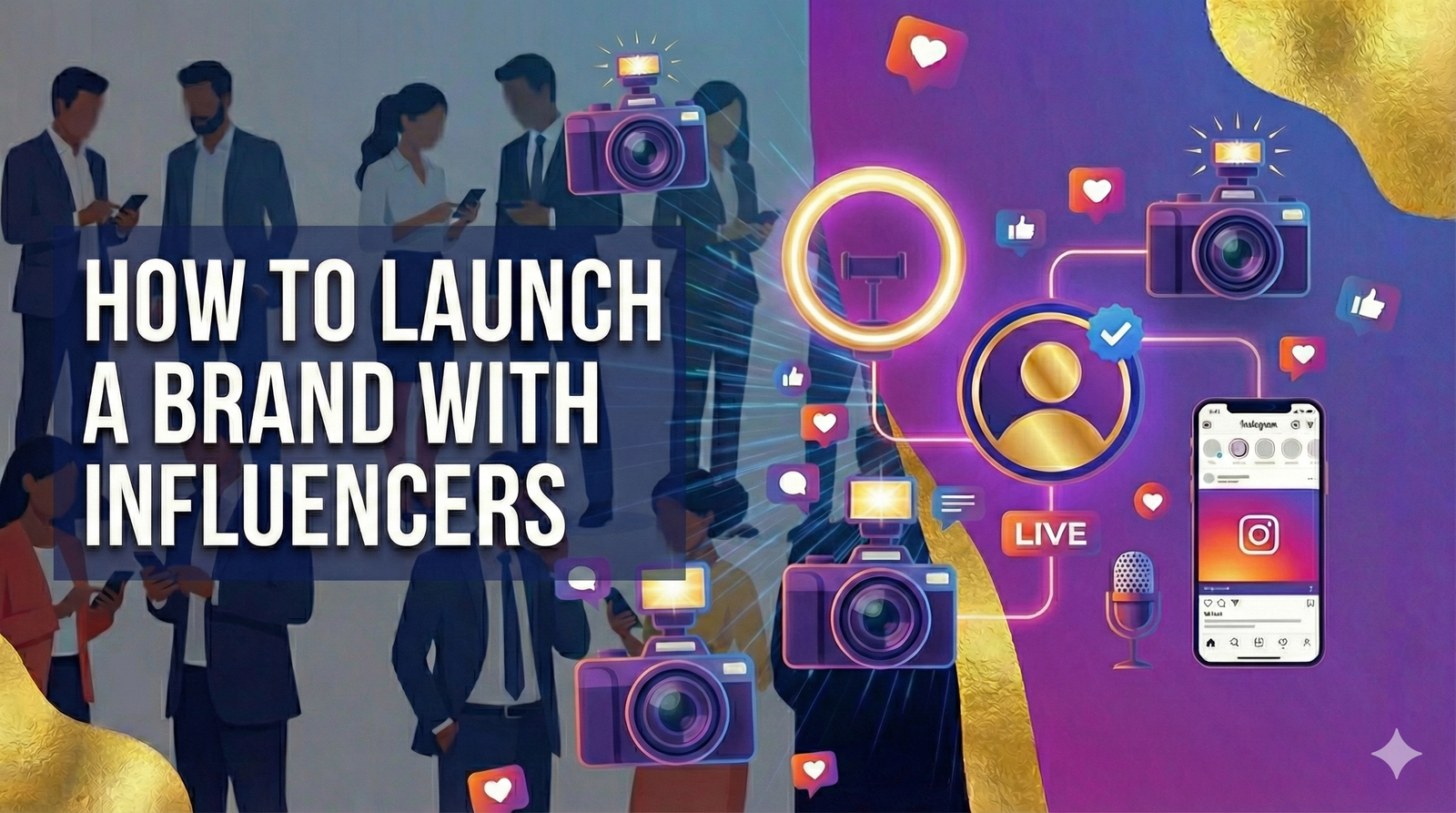
How to Launch a Brand With Influencers
In 2026, attention is fragmented, and paid ads are more expensive than ever. New brands that rely only on traditional advertising often struggle to build trust quickly. Influencer marketing, when executed strategically, can accelerate awareness, create cultural relevance, and drive measurable conversions from day one.
At Elleven Media, we do not treat influencer marketing as isolated posts. We build structured launch ecosystems that combine influencers, creators, performers, and live or virtual experiences to create momentum across platforms.
This step-by-step plan explains how to launch a brand with influencers in a scalable and repeatable way.
Step 1: Define Clear Launch Goals and Audience
Every successful influencer campaign starts with clarity.
Before selecting creators, define what success looks like:
- Brand awareness
- Email signups or waitlist growth
- Pre orders
- Event attendance
- Direct sales
Separate awareness from performance objectives early. For example:
- Awareness goal: Reach a defined audience with consistent impressions over 30 days
- Performance goal: Drive a specific number of trial signups or product purchases
Tie each objective to measurable tools:
- UTM links
- Unique landing pages
- Discount codes
- QR codes for events
- RSVP tracking
This transforms influencer marketing from guesswork into a structured growth strategy.
Understand Where Your Audience Lives
Define:
- Age range
- Interests
- Daily habits
- Preferred platforms
- Content styles they consume#
For example:
- TikTok for discovery and trends
- Instagram for aesthetics and community
- YouTube for deeper product education
- Live events for immersive experiences
Audience clarity determines platform mix, content format, and influencer selection.
Step 2: Build a Strategic Influencer Framework
Launching a brand requires coordination. It should feel like a campaign, not scattered posts.
Structure a 4–6 Week Launch Arc
- Tease Phase
Build curiosity with hints, countdowns, and early access signups.
- Reveal Phase
Share product, founder story, and brand mission.
- Education Phase
Tutorials, problem solution content, and testimonials.
- Social Proof Phase
User-generated content, creator reviews, reactions.
- Optimisation Phase
Boost winning content with paid media and creator whitelisting.
This approach turns influencer marketing into a controlled growth engine.
Step 3: Choose the Right Influencers
Follower count alone does not determine impact.
Use a structured evaluation framework:
- Relevance to your niche
- Audience overlap
- Engagement quality
- Content consistency
- Brand safety alignment
- Regional fit
Tiered Creator Mix Strategy
A diversified roster often outperforms a single large influencer.
- Nano and micro creators for authenticity and niche trust
- Mid-tier creators for scale and credibility
- One or two marquee names for visibility spikes or event moments
This mix balances cost, reach, and engagement depth.
At Elleven Media, we curate influencers based on audience data, performance history, and campaign objectives rather than popularity alone.
Step 4: Craft Strong Briefs and Regional Angles
Creators perform best when guided clearly but not scripted rigidly.
A strong brief includes:
- Campaign objectives
- Key messaging
- Mandatory disclosures
- Deliverables and timelines
- Content usage rights
- Brand voice guidelines
Then allow creative freedom in tone and storytelling.
Localise for Maximum Impact
Regional nuance increases authenticity.
Adapt messaging by:
- City lifestyle
- Climate
- Cultural events
- Academic calendars
- Local trends
For example:
- Urban creators may focus on convenience
- Suburban creators may highlight family benefits
- Regional influencers may integrate local festivals or routines
This creates relevance at scale.
Step 5: Execute Launch Week Like a Live Production
Treat launch week as a coordinated show.
- Build a master content calendar.
- Schedule posts across time zones
- Align influencer drops for momentum
- Integrate livestreams or pop-ups
- Prepare backup content
During the campaign:
- Monitor engagement trends
- Adjust hooks and captions
- Optimise calls to action
- Boost top-performing content
Elleven Media supports campaign management, creator coordination, and real-time optimisation to ensure launch week delivers measurable results.
Measure, Optimise, and Scale
Track both awareness and performance metrics:
- Reach and impressions
- Saves and shares
- Click-through rate
- Conversion rate
- Follower growth
- Branded search trends
Identify high-performing regions and creators, then:
- Increase paid amplification
- Extend partnerships
- Repurpose top content
- Expand into additional markets
This turns a single launch into a long-term growth channel.
Frequently Asked Questions
How much should a startup budget for influencer marketing in 2026?
Early-stage brands often test between 1 to 5 lakh INR per month across multiple micro creators. Budgets vary depending on tier, content volume, and paid amplification. Scaling should follow performance validation.
Are micro influencers effective for brand launches?
Yes. Micro influencers typically generate stronger engagement rates and community trust. Coordinated waves of micro creators can outperform a single large placement.
When should influencer planning begin?
Plan at least six to ten weeks. This allows time for creator selection, content development, approvals, and scheduling.
How do you measure influencer ROI?
Use unique tracking links, creator-specific codes, landing pages, and platform analytics. Combine engagement metrics with direct sales and signups for a full picture.
Should brands work directly with influencers or through an agency?
Direct outreach can work for small campaigns. However, agencies such as Elleven Media provide structured strategy, curated talent networks, negotiation support, and multi-region campaign coordination. This becomes critical for large-scale or hybrid campaigns.
Conclusion
Influencer marketing in 2026 is not about one viral moment. It is about building coordinated visibility, trust, and sustained engagement.
A structured approach includes:
- Clear objectives
- Audience clarity
- Strategic creator mix
- Strong briefs
- Regional localisation
- Measured optimisation
Elleven Media helps brands design and execute influencer-driven launches that integrate digital creators, performers, and live experiences into one cohesive strategy.
If you are planning a new brand launch, partner with Elleven Media to build an influencer campaign designed for visibility, credibility, and measurable growth.